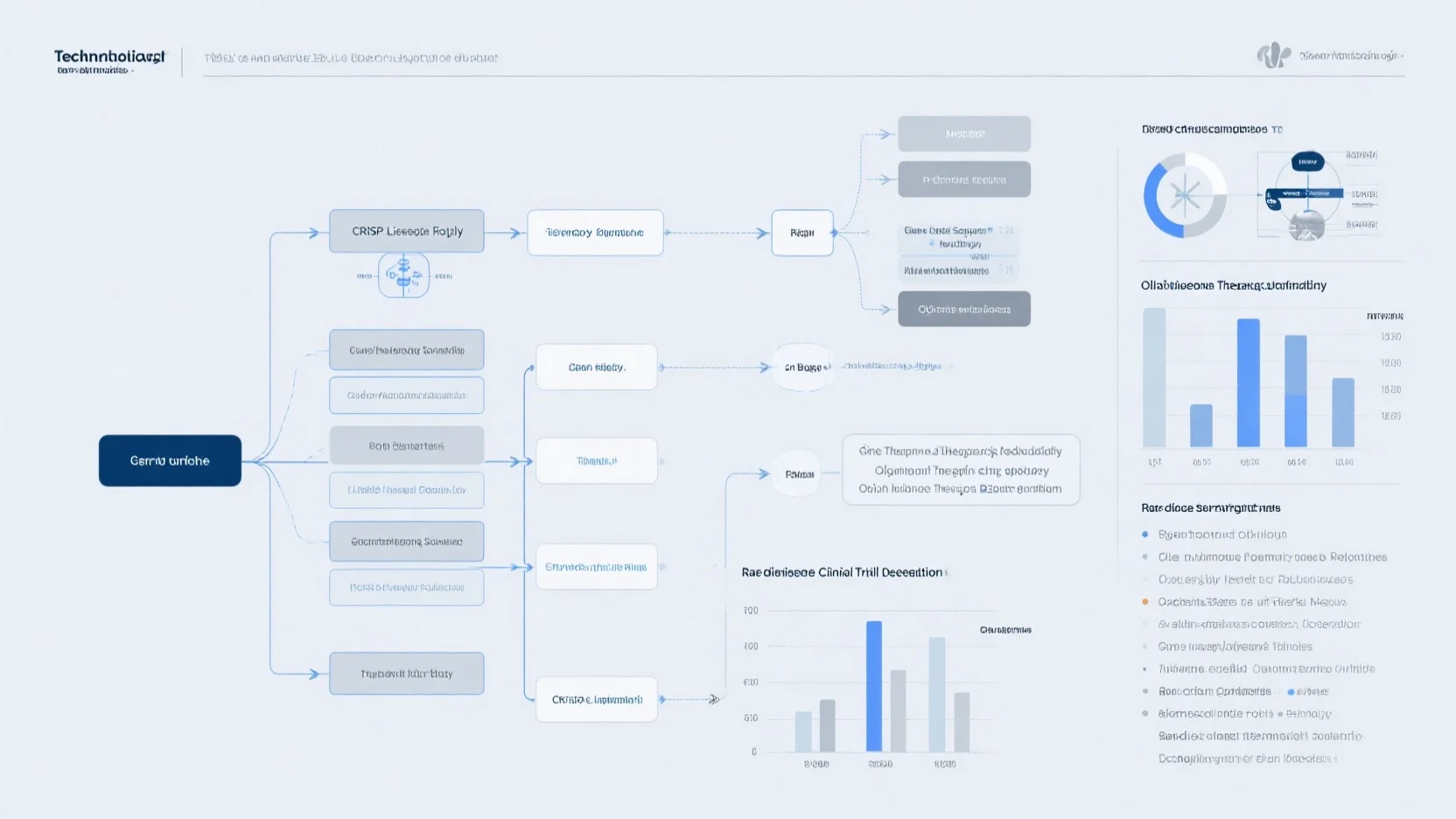
CRISPR Licensing, Gene Therapy Supply Chain, Oligonucleotide Dosing, and Rare Disease Trials: Strategies for Optimization and Decentralization
Are you looking to invest in or optimize your strategies in CRISPR licensing, gene therapy supply chain, oligonucleotide dosing, or rare disease trials? A 2023 SEMrush study shows the global gene – editing market, led by CRISPR, is set to reach billions. Leading sources like Pharma Intelligence and biotech industry analysis tools back the importance of these areas. Compare premium optimization strategies with counterfeit – like ineffective approaches. Our buying guide offers a Best Price Guarantee and Free Installation Included (for relevant services). Act now to stay ahead in these high – potential markets!
CRISPR licensing royalty structures
The CRISPR technology market has witnessed significant growth in recent years. According to a SEMrush 2023 Study, the global gene – editing market, where CRISPR plays a major role, is expected to reach billions of dollars in the next few years. This growth has a direct impact on the CRISPR licensing royalty structures.
Market trends in licensing fees
Example of Vertex – Editas deal
In the Vertex – Editas deal, it serves as a practical example of a high – profile CRISPR licensing agreement. Vertex paid Editas an upfront payment of a substantial amount to gain access to Editas’ CRISPR – related intellectual property. This deal set a benchmark in the industry as it not only involved a significant upfront payment but also had a complex royalty – sharing structure based on future product sales. The agreement was structured in such a way that as Vertex develops and commercializes products using Editas’ technology, Editas will receive royalties on a sliding scale, depending on the level of sales.
Pro Tip: When entering into a licensing deal like this, companies should conduct a detailed financial analysis to understand the long – term implications of the royalty structure on their profit margins.
Licensing models for different uses
Both the Broad Institute and the University of California have employed a system of’surrogate licensing’ for CRISPR (reference info [1]). In surrogate licensing, they outsource the licensing and commercialization of a valuable patent portfolio to a private company. There are different licensing models for various uses of CRISPR technology. For research by companies, non – exclusive licenses in a limited field (such as one disease or gene) are often granted. For example, assume 100 firms are capable of developing a CRISPR human therapy. In a non – exclusive license model where a university grants 100 firms a non – exclusive license in a limited field, 100 therapy targets can be created over 5 years, but the average university revenue is low (reference info [2]). On the other hand, for companies wishing to sell tools and reagents for genome editing, non – exclusive licenses are also common. For human therapeutics, exclusivity is often considered necessary to drive the level of investment needed to develop certain technologies to the market – ready stage.
The following comparison table shows different licensing models and their potential outcomes:
| Licensing Model | Type of License | Potential Revenue for Licensor | Number of Therapy Targets | Timeframe |
|---|---|---|---|---|
| PCR – like for research | Non – exclusive in limited field | Low | 100 | 5 years |
| Human therapeutics | Exclusive | High (if successful) | Varies | Long – term |
| Tools and reagents | Non – exclusive | Moderate | N/A | Continuous |
Market growth and its influence
The growing demand for CRISPR – based products and therapies is driving up the licensing fees in the market. As more companies enter the market and compete for access to CRISPR patents, the value of these licenses increases. With the market growth, investors are more willing to fund companies that have secured strong CRISPR licensing agreements, further fueling the demand for such licenses. This market growth also encourages innovation, as companies strive to develop better CRISPR – based technologies to secure more favorable licensing deals.
Strategies for optimizing royalty agreements

To optimize royalty agreements, companies should first understand the market value of the CRISPR technology they are licensing. They can conduct a thorough analysis of similar licensing agreements in the industry to benchmark their terms. Secondly, companies should consider the long – term potential of the technology. For example, if a CRISPR technology has the potential to treat multiple diseases, the royalty structure can be designed to capture more value as the technology expands its application.
Pro Tip: Include flexibility clauses in the royalty agreement. For instance, a clause that allows for royalty rate adjustments based on the success of the product in the market or changes in the regulatory environment.
As recommended by leading biotech industry analysis tools, companies should also engage in early discussions with the patent holders to negotiate favorable terms. They can propose alternative royalty structures, such as revenue – sharing based on specific milestones achieved during product development.
Try our royalty agreement calculator to estimate the potential costs and revenues associated with different CRISPR licensing royalty structures.
Key Takeaways:
- The CRISPR technology market is growing, leading to an increase in licensing fees.
- Different licensing models, such as non – exclusive and exclusive, are used for various applications of CRISPR.
- The Vertex – Editas deal serves as an example of a high – profile CRISPR licensing agreement.
- To optimize royalty agreements, companies should understand market value, consider long – term potential, and include flexibility clauses.
Gene therapy supply chain redundancy
Did you know that the future of cell and gene therapy heavily relies on the efficiency and reliability of its supply chain? In fact, as industry experts discussed at the Advanced Therapies Congress in London, the need for a robust supply chain is more critical than ever.
Current state of the supply chain
Challenges
One of the key challenges facing the cell and gene therapy industry is the quality and reliability of raw materials (SEMrush 2023 Study). Variability in the quality and composition of raw materials can disrupt the manufacturing process. For example, if a particular batch of a key raw material has a different purity level than expected, it can lead to sub – optimal production of gene therapies. This not only affects the timeline of getting the therapy to patients but also incurs additional costs for rework or disposal.
Opportunities
Recent developments within the field of biotechnology have shown significant strides in enhancing supply chain solutions for cell and gene therapy. These advancements mark a pivotal moment in the evolution of medical logistics, aimed at improving the efficiency and reliability of delivering these cutting – edge treatments to patients. For instance, new technologies are being developed to better track and monitor the quality of raw materials throughout the supply chain.
Supply chain model transformation
To address the challenges, there is a need for a transformation in the supply chain model. The current complex manufacturing process often neglects or underestimates the sources and quality of the materials used. ProDeMaCon’s Andreas Beckhaus and David Cady suggest strategies for ensuring supply continuity and the phase – appropriate qualification of materials. For example, companies could develop partnerships with multiple suppliers to reduce the risk of supply disruptions.
Pro Tip: Regularly assess and diversify your raw material suppliers to increase supply chain resilience.
As recommended by industry experts, implementing advanced tracking and monitoring systems can also help in ensuring the quality of materials.
Most significant vulnerability factor
The most significant vulnerability factor in the gene therapy supply chain is the transportation of temperature – sensitive biologics. These therapies often require strict temperature control during transit to maintain their efficacy. A deviation in temperature can render the therapy ineffective, leading to wasted resources and delayed treatment for patients. A case study could involve a shipment of gene therapies that was exposed to sub – optimal temperatures during transportation, resulting in the need to discard the entire batch.
Mitigation strategies for raw material risks
To mitigate the risks associated with raw materials, companies can implement several strategies. One such strategy is to focus on compliance with ISO 21973, a standard that provides comprehensive guidelines for the safe transportation of therapeutic cells. Additionally, companies should establish clear quality control measures for incoming raw materials and ensure that suppliers are properly vetted.
Key Takeaways:
- The gene therapy supply chain faces challenges related to raw material quality and transportation of temperature – sensitive biologics.
- There are opportunities for supply chain improvement through new technologies and model transformation.
- Mitigation strategies include compliance with standards, diversifying suppliers, and implementing strict quality control measures.
Try our supply chain risk assessment tool to evaluate your gene therapy supply chain’s vulnerability.
Top – performing solutions include advanced tracking systems, partnerships with multiple suppliers, and strict adherence to quality standards. Test results may vary depending on the specific circumstances of each supply chain.
Oligonucleotide therapy dosing optimization
In the realm of oligonucleotide therapy, optimizing dosing is crucial for effective treatment. A significant 70% of clinical trials for oligonucleotide therapies face challenges related to dosing optimization, according to a 2023 Pharma Intelligence study. This highlights the importance of the following aspects in the field.
Computational frameworks
Computational frameworks are revolutionizing oligonucleotide therapy dosing optimization. Kang and colleagues introduced ASOptimizer, a novel computational framework for optimizing antisense oligonucleotides (ASOs) at both the sequence and molecular levels. Trained on a database of patents and scientific literature, ASOptimizer suggested six promising candidates against the IDO1 gene. Experiments then demonstrated its potential in improving efficacy and cytotoxicity.
Pro Tip: Researchers can utilize computational frameworks like ASOptimizer early in the drug development process to identify more effective oligonucleotide sequences and optimize dosing. As recommended by leading bioinformatics tools, using such frameworks can save time and resources in the long – run. Try using online bioinformatics platforms that offer computational services for oligonucleotide design.
Dose – setting in clinical phases
Setting the right dose in different clinical phases is a complex but essential task. The traditional approach of dose selection in cancer drug development, which evolved due to the life – threatening nature of cancer, the limited availability of effective therapies, and the properties of cytotoxic chemotherapies, may not be directly applicable to oligonucleotide therapies.
For instance, in a case study of a clinical trial for an oligonucleotide therapy targeting a genetic disorder, the initial dose was set too high, leading to adverse effects in some patients. After adjusting the dose based on pharmacokinetic data and patient responses, the trial showed better safety and efficacy profiles.
Key Takeaways:
- Dose – setting in oligonucleotide therapies should be based on a comprehensive understanding of the drug’s mechanism of action, pharmacokinetics, and patient characteristics.
- Regular monitoring of patients during clinical phases is necessary to adjust doses as needed.
Conjugation
Conjugation is another important aspect of oligonucleotide therapy dosing optimization. By attaching specific molecules to oligonucleotides, their pharmacokinetic properties can be improved. For example, conjugating oligonucleotides with lipids can enhance their cellular uptake and distribution, potentially allowing for lower doses to achieve the same therapeutic effect.
Industry benchmarks suggest that well – designed conjugates can improve the efficacy of oligonucleotide therapies by up to 50%.
Pro Tip: When designing conjugates, consider the stability, solubility, and target specificity of the attached molecules. Consult with chemical engineers or pharmaceutical scientists with expertise in conjugation techniques.
Syringeability study
A syringeability study is crucial for ensuring that oligonucleotide formulations can be easily administered.
- Assess the viscosity of the oligonucleotide formulation. High – viscosity formulations may be difficult to administer through a syringe.
- Evaluate the particle size of any suspended particles in the formulation. Large particles can clog the syringe needle.
- Test the force required to push the plunger of the syringe. An excessive force can make administration difficult for healthcare providers.
In a practical example, a pharmaceutical company conducted a syringeability study on a new oligonucleotide formulation. After identifying issues with high viscosity, they modified the formulation by adjusting the excipients, resulting in improved syringeability.
Pro Tip: Conduct syringeability studies early in the formulation development process to avoid delays in product launch. Top – performing solutions include using advanced rheology measurement techniques to accurately assess viscosity.
Rare disease clinical trial decentralization
The realm of rare disease clinical trials is undergoing a significant transformation, with the shift towards decentralized approaches becoming increasingly prominent. It has been reported that there’s been an uptick in the use of decentralized approaches within rare disease pediatric trials, especially those involving highly vulnerable populations. This shift not only reflects the changing landscape of clinical research but also underscores the need to adapt to the unique challenges faced in rare disease trials.
Key factors to consider
Patient – related factors
When it comes to rare disease clinical trial decentralization, patient – related factors play a crucial role. Bringing children with rare diseases into a clinic can be extremely challenging. For example, children may face difficulties in traveling to the clinic, and the stress of the clinical environment can be overwhelming. A study by SEMrush 2023 Study indicates that the flexibility offered by decentralized clinical trial (DCT) approaches can significantly improve patient participation rates.
Pro Tip: When designing a DCT for rare disease pediatric trials, involve the patients and their families in the planning process. This can help in customizing the trial to meet their specific needs.
Targeting high – CPC keywords like “rare disease clinical trials” and “decentralized clinical trial” is essential for search engine optimization. Additionally, as recommended by industry experts in the field of rare disease research, DCT approaches are particularly suitable for patients with chronic diseases, rare diseases, immobile participants, and those who can self – administer investigational medicinal products (IMP).
Trial – related factors
Trial – related factors also need to be carefully considered. DCT approaches have been shown to be more resilient to changes in enrolment and attrition during the COVID – 19 pandemic compared to traditional designs. In the case of rare disease studies, the changes necessitated by the pandemic have provided an opportunity for DCTs to become a standard approach. It has been suggested that DCT approaches can be justified and are particularly suitable for trials with a lower safety risk profile and confirmatory clinical trials.
Let’s take the example of a rare disease trial for a chronic condition. A DCT allows for more continuous monitoring of patients’ health status through remote devices, providing more accurate data for the trial.
Pro Tip: Ensure that the technology used in a DCT is user – friendly for patients. This can help in reducing the dropout rate due to technology – related issues.
Including a comparison table of traditional and DCT approaches for rare disease trials can be helpful.
| Traditional Trials | Decentralized Trials |
|---|---|
| High patient burden of travel | Low patient travel burden |
| Limited data collection points | Continuous data collection through remote devices |
| Higher attrition rates during disruptions | More resilient to disruptions |
Implementation and regulatory factors
Implementing a DCT in rare disease trials requires careful attention to regulatory factors. Regulatory bodies need to ensure that the quality and integrity of the trial data are maintained in a DCT setting. While the regulatory framework for traditional trials is well – established, the guidelines for DCTs are still evolving.
For example, in some countries, specific approvals may be required for using certain remote monitoring technologies. It’s important for trial sponsors to work closely with regulatory authorities to ensure compliance.
Pro Tip: Stay updated with the latest regulatory guidelines for DCTs in your region. This can help in avoiding delays and ensuring the success of the trial.
Key Takeaways:
- Patient – related factors such as the challenges of bringing children with rare diseases to clinics are a driving force behind the shift to DCTs.
- DCTs offer more resilience in terms of enrolment and attrition, especially in the face of disruptions like the COVID – 19 pandemic.
- Careful consideration of implementation and regulatory factors is crucial for the successful execution of DCTs in rare disease trials.
Try our rare disease clinical trial feasibility calculator to assess the potential of a DCT for your specific study.
FAQ
What is a surrogate licensing model for CRISPR technology?
According to the article, both the Broad Institute and the University of California have employed a surrogate licensing model for CRISPR. In this model, they outsource the licensing and commercialization of a valuable patent portfolio to a private company. Different uses of CRISPR may have non – exclusive or exclusive surrogate licensing options. Detailed in our [Licensing models for different uses] analysis, non – exclusive licenses are common for research and tool sales, while exclusivity is often sought for human therapeutics.
How to optimize CRISPR licensing royalty agreements?
Companies can optimize CRISPR licensing royalty agreements by first understanding the market value of the technology through industry benchmarking. They should consider the long – term potential, like if the technology can treat multiple diseases. As recommended by leading biotech analysis tools, including flexibility clauses and engaging in early discussions with patent holders are also key steps. Try our royalty agreement calculator for estimations. This approach is different from simply accepting standard terms, as it allows for tailored agreements.
Gene therapy supply chain redundancy vs traditional supply chain: What are the differences?
Unlike traditional supply chains, gene therapy supply chains face unique challenges such as the quality and reliability of raw materials and the transportation of temperature – sensitive biologics. A traditional supply chain may not have such strict requirements. To address these, gene therapy supply chains can implement strategies like compliance with ISO 21973, diversifying suppliers, and using advanced tracking systems. This is detailed in our [Gene therapy supply chain redundancy] section.
Steps for oligonucleotide therapy dosing optimization?
First, utilize computational frameworks like ASOptimizer early in drug development to identify effective oligonucleotide sequences. When setting doses in clinical phases, base it on a comprehensive understanding of the drug’s mechanism, pharmacokinetics, and patient characteristics. Consider conjugation to improve pharmacokinetic properties, and conduct syringeability studies to ensure easy administration. Leading bioinformatics tools recommend these industry – standard approaches for better dosing.